
Free report · 41 pages · PDF · November 2026
AI-driven customer engagement
The future of pharma commercialization
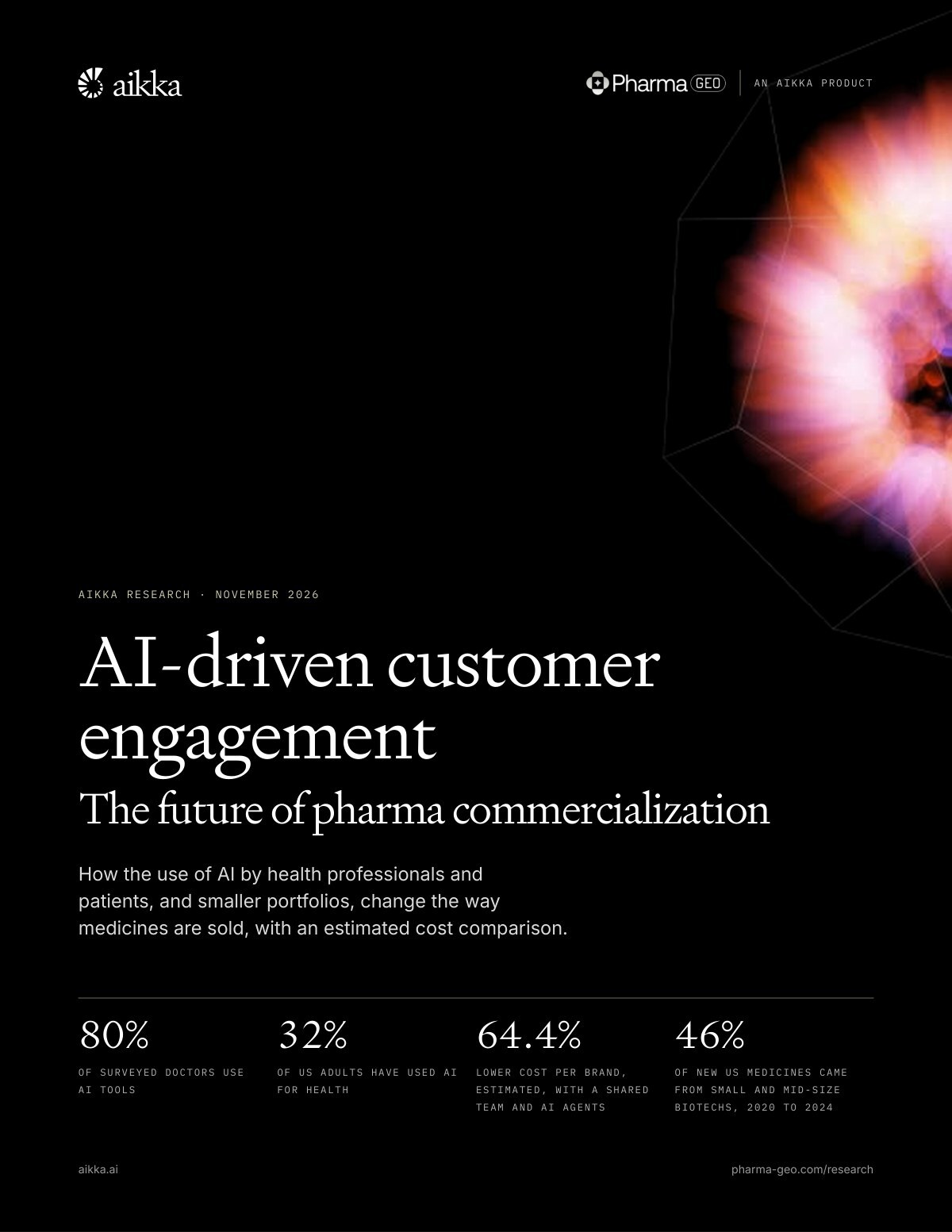
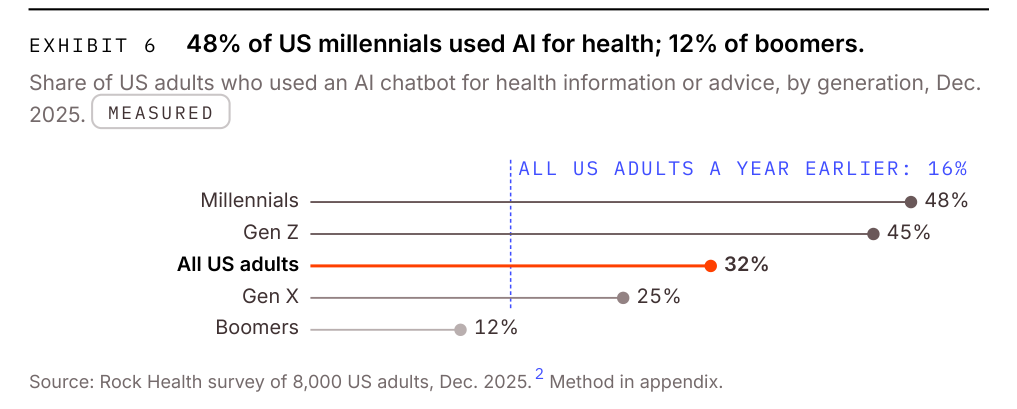
More health professionals and patients now use AI to look up medicines: 72% of US doctors used AI for at least one task in 2026, up from 38% in 2023, and 32% of US adults used an AI chatbot for health. The report shows where AI appears when a medicine is chosen, and estimates the cost of a team supported by AI agents.
In the report
- 3 changes in how medicines are sold, with the evidence for each
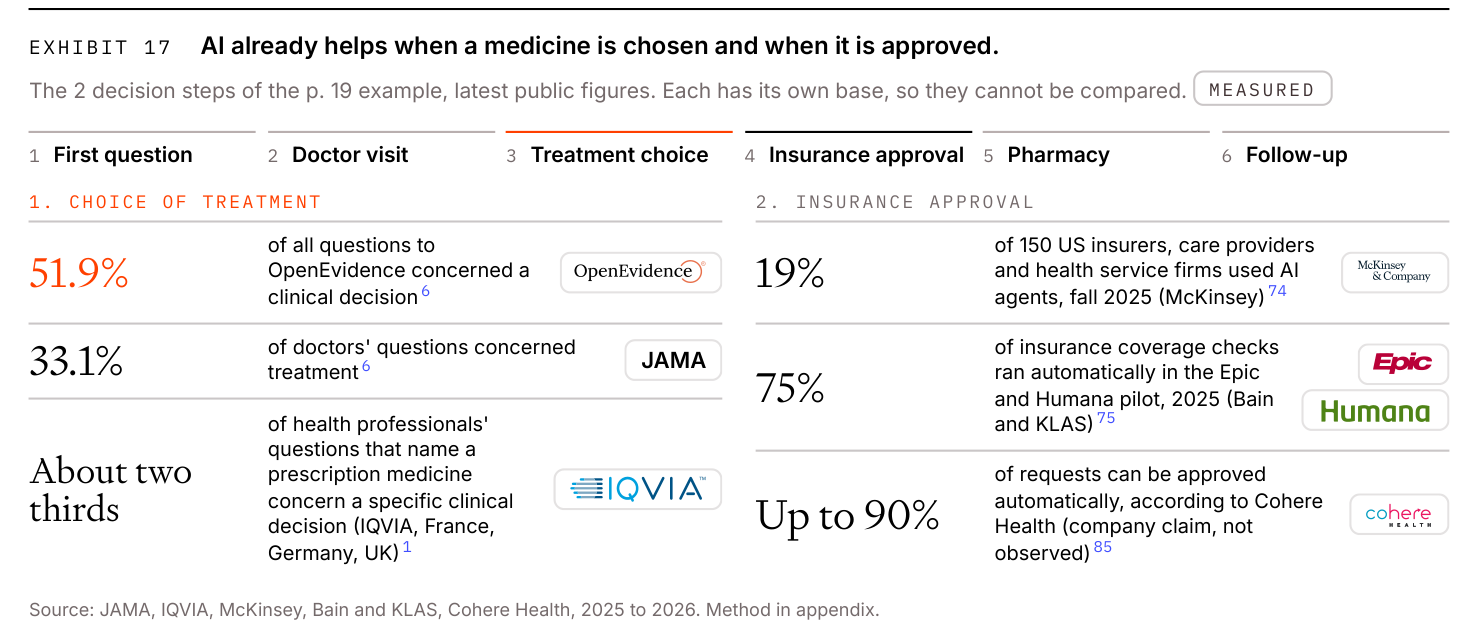
- Where AI appears when a medicine is chosen, and its known limits
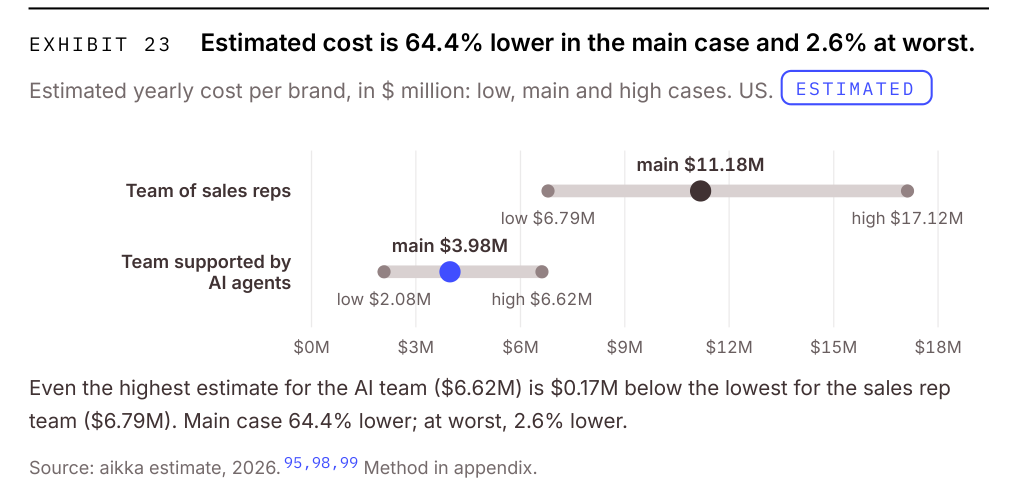
- The estimated cost of a team supported by AI agents, in a low, a main and a high case
The publication is written in English.
Key findings
- US doctors' use of AI rose from 38% in 2023 to 72% in 2026.
- 51.9% of questions to OpenEvidence, an AI tool for doctors, were about a decision for a patient.
- 32% of US adults used an AI chatbot for health, up from 16% a year earlier.
- Brands over 10 years old receive about 1.5% of their sales in promotion.
- A team shared across brands and supported by AI agents costs an estimated 64.4% less per brand in the main case, and 2.6% less at worst.
Exhibits
aikka builds AI-native commercialization for pharma. PharmaGEO, our entry product, shows brand teams what health professionals and patients ask AI tools about their medicines, and what the AI tools answer.